
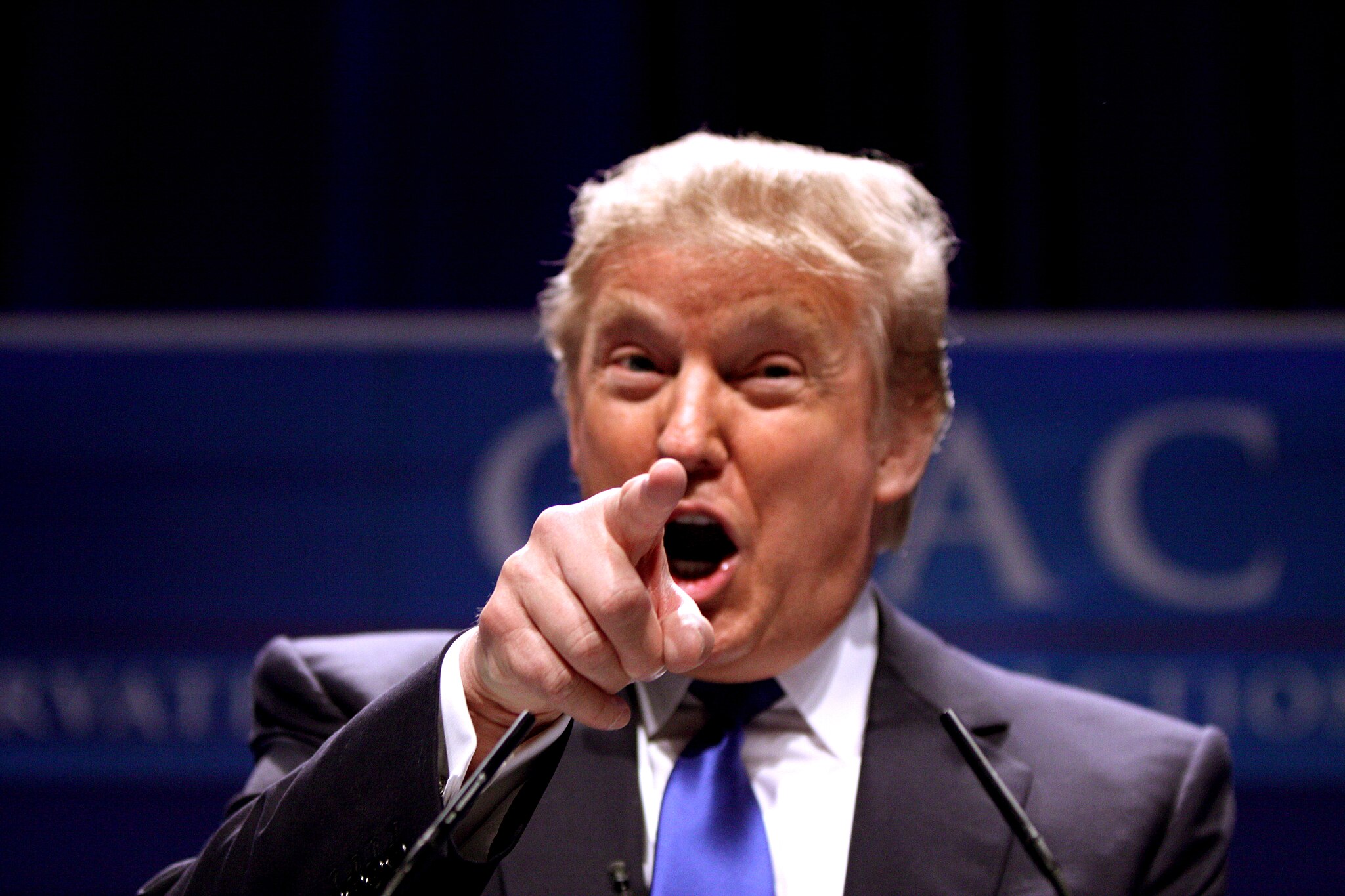
Here’s what Trump just did.
A new political battle is unfolding in Washington after President Donald Trump announced that he will not support renewing a key U.S. surveillance authority unless lawmakers also approve sweeping election-related reforms.
The issue centers on Section 702 of the Foreign Intelligence Surveillance Act (FISA), a controversial intelligence-gathering program that recently expired after Congress failed to reach a long-term agreement. Trump is now insisting that any effort to restore the surveillance authority must include the SAVE America Act, a proposal that would require proof of U.S. citizenship for voter registration and implement several additional election-related measures.
The move has intensified an already heated debate involving national security, voter eligibility laws, government surveillance, and partisan politics.
Trump’s Position on FISA and Election Security
In a post on Truth Social, Trump argued that he would oppose reauthorizing FISA Section 702 unless the full SAVE America Act is attached to the legislation.
The president’s comments place election integrity concerns at the center of negotiations surrounding one of the government’s most important intelligence tools.
Trump has repeatedly argued that stronger voter verification measures are needed to increase public confidence in elections. Supporters of his position say proof-of-citizenship requirements would help ensure that only eligible voters participate in federal elections.
Critics, however, contend that federal law already prohibits non-citizens from voting and argue that additional documentation requirements could create barriers for some eligible voters.
The disagreement reflects a broader national debate over election administration that has continued since the 2020 presidential election.
What Is FISA Section 702?
Section 702 of the Foreign Intelligence Surveillance Act allows U.S. intelligence agencies to collect communications involving foreign individuals located outside the United States without obtaining traditional warrants.
National security officials have long described the authority as a critical tool for identifying terrorist threats, monitoring foreign adversaries, tracking cyberattacks, and gathering intelligence on hostile governments.
Supporters argue that the program has helped prevent security threats and provides intelligence agencies with valuable information that would otherwise be difficult to obtain.
At the same time, privacy advocates and some lawmakers have raised concerns about government surveillance powers and the potential collection of communications involving Americans.
Those concerns have fueled years of debate in Congress regarding oversight, transparency, and limitations on intelligence gathering.
Why Congress Failed to Reach an Agreement
Lawmakers spent months attempting to negotiate a longer-term extension of Section 702 before the authority expired.
While both parties generally agree that national security remains a top priority, disagreements emerged over multiple provisions related to surveillance oversight, privacy protections, and unrelated policy measures that became attached to negotiations.
Earlier this year, Congress approved a temporary extension designed to give lawmakers additional time to resolve those disputes. However, the deadline arrived without a final compromise.
Now that Section 702 has lapsed, pressure is increasing on congressional leaders to find a path forward.
What Is the SAVE America Act?
The SAVE America Act has become one of the most discussed election-related proposals in Washington.
One of its most notable provisions would require individuals registering to vote in federal elections to provide proof of U.S. citizenship.
Supporters argue that the requirement would strengthen election security, improve voter confidence, and create uniform standards nationwide.
Opponents say election officials already have safeguards in place to verify eligibility and warn that additional paperwork requirements could create administrative challenges.
The legislation also includes several other election-related reforms that have generated debate among lawmakers, voting rights organizations, and election officials.
With Trump now linking the legislation directly to FISA renewal, the proposal has taken on greater political significance.
The Bill Pulte Controversy
Complicating negotiations is the controversy surrounding Bill Pulte, who Trump selected to serve as acting Director of National Intelligence while awaiting confirmation of a permanent nominee.
Pulte currently leads the Federal Housing Finance Agency and has attracted national attention for his criticism of several prominent public officials.
Supporters view Pulte as a reform-minded outsider willing to challenge established institutions and pursue accountability.
Critics argue that overseeing the intelligence community requires extensive national security experience and have questioned whether Pulte is the right choice for the role.
Some lawmakers have also expressed concern that political conflicts could influence intelligence operations, while supporters reject those claims and argue that reforms are needed within government agencies.
The debate has become a major obstacle in broader negotiations over surveillance legislation.
Jay Clayton’s Nomination Could Change the Debate
Trump recently announced that he intends to nominate Jay Clayton to serve as Director of National Intelligence on a permanent basis.
Clayton previously served as chairman of the Securities and Exchange Commission and currently serves as U.S. Attorney for the Southern District of New York.
His nomination has received significant attention because lawmakers from both parties view the position as one of the most important national security roles in the federal government.
Several senators have suggested that moving quickly on Clayton’s confirmation could help ease concerns surrounding the leadership transition and create momentum for a FISA agreement.
Whether that proves enough to break the deadlock remains uncertain.
Why This Debate Matters
The current dispute extends far beyond a single piece of legislation.
The outcome could affect how intelligence agencies collect information, how election laws are administered, and how Congress approaches future debates involving national security and voting regulations.
For supporters of stronger election safeguards, the negotiations represent an opportunity to advance reforms they believe will strengthen public trust in the electoral process.
For opponents, the debate raises questions about voting access, federal oversight, and the balance between election security and voter participation.
Meanwhile, intelligence officials continue to warn that delays in restoring surveillance authorities could complicate efforts to monitor foreign threats.
What Happens Next?
Congress now faces growing pressure to resolve multiple issues at once.
Lawmakers must determine whether Section 702 should be restored, what reforms—if any—should accompany its renewal, and how concerns regarding intelligence oversight should be addressed.
At the same time, Senate leaders will likely focus on the confirmation process for Clayton and the future leadership of the intelligence community.
With national security, election policy, and partisan politics all intersecting in a single debate, the coming weeks could prove pivotal.
For now, Trump’s decision to tie surveillance authority to election reform has transformed what was already a complicated legislative negotiation into one of the most closely watched political battles in Washington.



Leave a Reply