
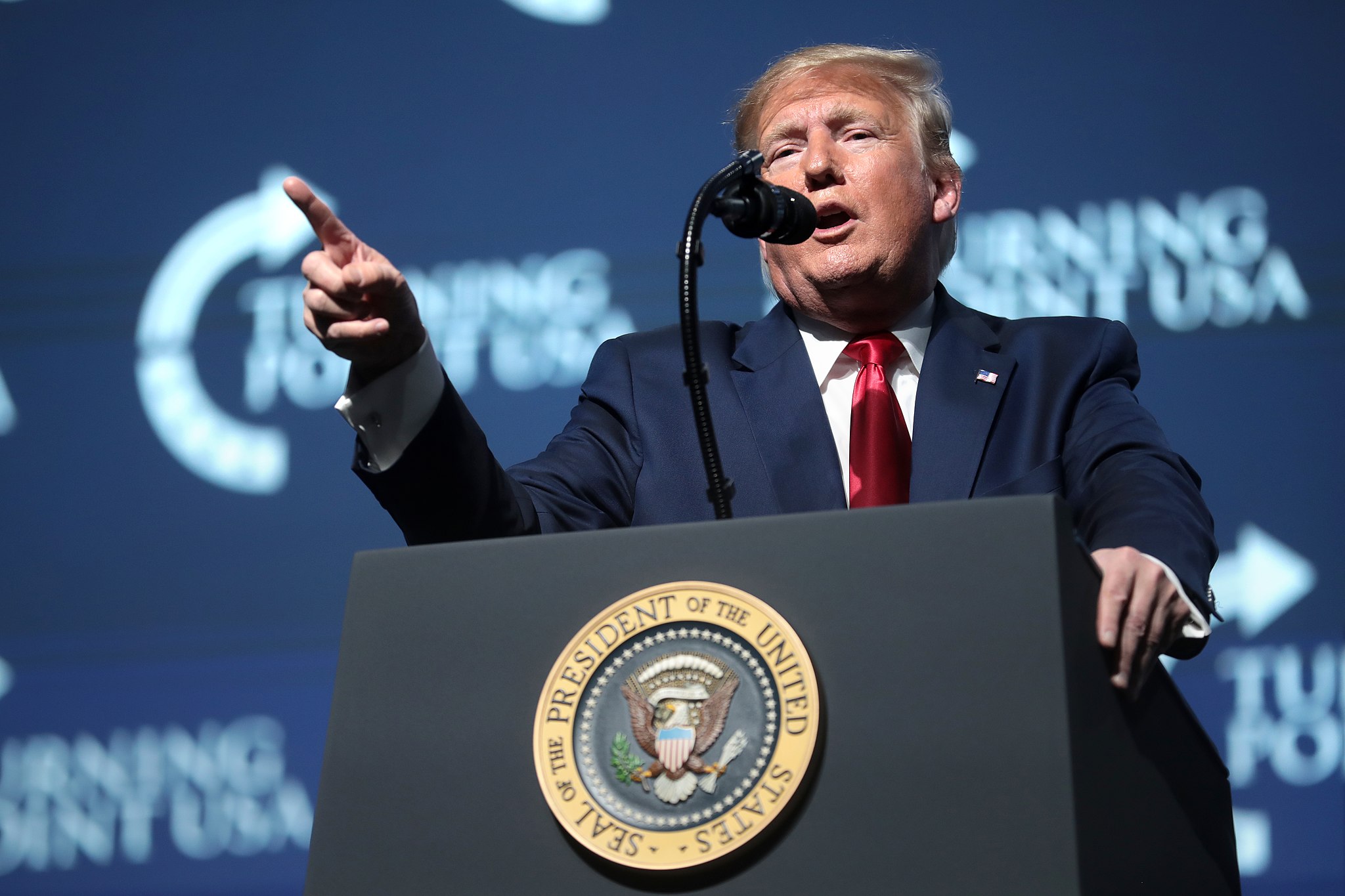
Here’s what conservative voters need to understand.
President Donald Trump and Republicans have plenty to campaign on heading into the 2026 midterm elections, but a major warning sign is emerging from voters in some of America’s most important battleground states.
And it has little to do with the political controversies dominating cable news.
For many voters, the biggest concern is much closer to home: the cost of everyday life.
A massive grassroots survey of more than 42,000 voters found that affordability, inflation and the economy are overwhelming other concerns in seven states with closely watched Senate races.
The findings could have major implications for Republicans as they fight to maintain control of Congress — and continue advancing Trump’s agenda in Washington.
Affordability Is Crushing Every Other Issue
Americans for Prosperity, a conservative grassroots organization, collected responses from 42,844 voters in Alaska, Iowa, Montana, Ohio, North Carolina, New Hampshire and Michigan.
The results delivered a remarkably clear message.
In July, 56.2% of voters surveyed identified the economy and inflation as their leading concern.
Nothing else came close.
Immigration registered at 10.2%, followed by energy and gasoline costs at 9.3%, healthcare at 8.9%, government accountability at 8.6%, crime at 4.3%, education at 2.3% and national security at just 0.2%.
The trend also appears to be growing.
A month earlier, 51.7% of voters surveyed had identified the cost of living as their biggest concern.
For Republican candidates, those numbers are difficult to ignore.
The Warning for Trump and Republicans
Republicans have spent considerable time emphasizing immigration, border security, crime, energy independence and other issues that helped build Trump’s political coalition.
But the survey suggests that many voters are currently preoccupied with something even more basic.
They want their paychecks to go further.
Families continue to feel pressure when buying groceries, paying medical bills, filling their gas tanks and covering other household expenses.
Katelyn Bledsoe, vice president of external affairs for Americans for Prosperity, warned that Republicans need to take those concerns seriously.
She acknowledged that Republicans have made progress in Congress while emphasizing that voters still want more relief from high living costs.
That distinction could prove critical in November.
Voters may agree with Trump’s broader economic philosophy while still being frustrated with what they are paying every week.
One Voter’s $300 Grocery Bill Says It All
The financial pressure becomes easier to understand when looking beyond percentages.
During the group’s voter outreach, a New Hampshire father described spending roughly $300 every week on groceries while feeding his teenagers.
For millions of Americans, that kind of household expense isn’t an abstract economic statistic.
It’s money that can no longer be saved for retirement, used to pay down a mortgage or spent on something the family actually wants.
Older Americans can face an especially difficult situation because many retirees depend heavily on fixed or relatively predictable incomes.
When groceries, healthcare, utilities, insurance and housing become more expensive, there may be little room in the monthly budget to absorb the difference.
That is why affordability can become such a powerful election issue.
Alaska Sends an Even Bigger Warning
The concern was particularly striking among voters surveyed in Alaska.
There, 74.4% identified affordability as their top issue, the highest percentage among the seven states included in the grassroots effort.
That doesn’t automatically mean those voters will blame Trump or Republicans.
But it does indicate what candidates may need to address when asking voters for their support.
Democrats understand the opportunity.
They have repeatedly attempted to make affordability a political liability for Trump and congressional Republicans, focusing their attacks on the prices Americans encounter in their daily lives.
The question is whether Republicans can successfully turn that argument around.
Republicans May Have an Opening
There is another side to the findings that could provide the GOP with a powerful response.
Many Americans apparently believe Washington itself is part of the affordability problem.
Americans for Prosperity pointed to separate survey results showing 73% of respondents believed government contributes to rising prices, while 61% said the federal government makes life more difficult.
That creates a natural opening for Republicans to argue that the solution isn’t more government spending and regulation, but less.
Trump and Republican candidates can make their case around familiar conservative economic principles: controlling federal spending, cutting unnecessary regulations, encouraging American energy production, protecting taxpayers and allowing businesses to compete.
Instead of simply telling voters that the economy is improving, Republicans may have more success explaining exactly how their policies are intended to make everyday necessities more affordable.
Socialism Could Become Part of the Midterm Debate
Another finding could benefit conservatives.
Americans for Prosperity highlighted polling showing a substantial gap between Americans’ attitudes toward free enterprise and socialism.
A Gallup survey found that 81% of Americans viewed free enterprise favorably, compared with 39% who held a favorable opinion of socialism.
That gives Republicans an opportunity to frame the affordability debate as a larger choice over America’s economic direction.
As democratic socialist politicians gain attention within the Democratic Party, Republicans are likely to argue that bigger government, increased spending and heavier regulation would make affordability problems worse rather than better.
One Michigan voter interviewed during the grassroots effort specifically expressed concern about democratic socialism and its distance from the principles of America’s founding.
For conservatives, that sentiment could become an important part of the midterm message.
Why the 2026 Midterms Matter for Trump
The stakes extend far beyond individual House and Senate races.
Control of Congress will determine how easily Trump can pursue his agenda during the remainder of his presidency.
A Republican-controlled Congress could continue working with the White House on taxes, immigration, energy, spending and other priorities.
A Democratic takeover of either chamber could create significant roadblocks for the administration and dramatically change the political landscape in Washington.
That makes every competitive race important.
And according to this grassroots research, candidates who overlook affordability could be overlooking the issue voters care about most.
The Bottom Line
Republicans have an argument they can make.
They can point to the inflation and economic pressures Americans endured in previous years. They can contrast free-market policies with the expanding influence of democratic socialism. And they can argue that reducing government spending, regulation and barriers to domestic production offers a better long-term path toward prosperity.
But voters aren’t living in the long term.
They’re paying today’s grocery bill.
They’re filling today’s gas tank.
They’re paying this month’s mortgage, rent, insurance premium and medical expenses.
That may ultimately be the biggest lesson for Trump and Republicans heading toward November.
Immigration, crime and national security aren’t disappearing from the political debate. But if affordability continues dominating voter concerns, Republicans may need to make lowering everyday costs the centerpiece of their midterm message.
The battle for Congress could ultimately come down to a remarkably simple question:
Do Americans believe their family’s financial situation is getting better?
For Trump and the GOP, the answer could help determine who controls Washington after the 2026 midterms.






Leave a Reply