
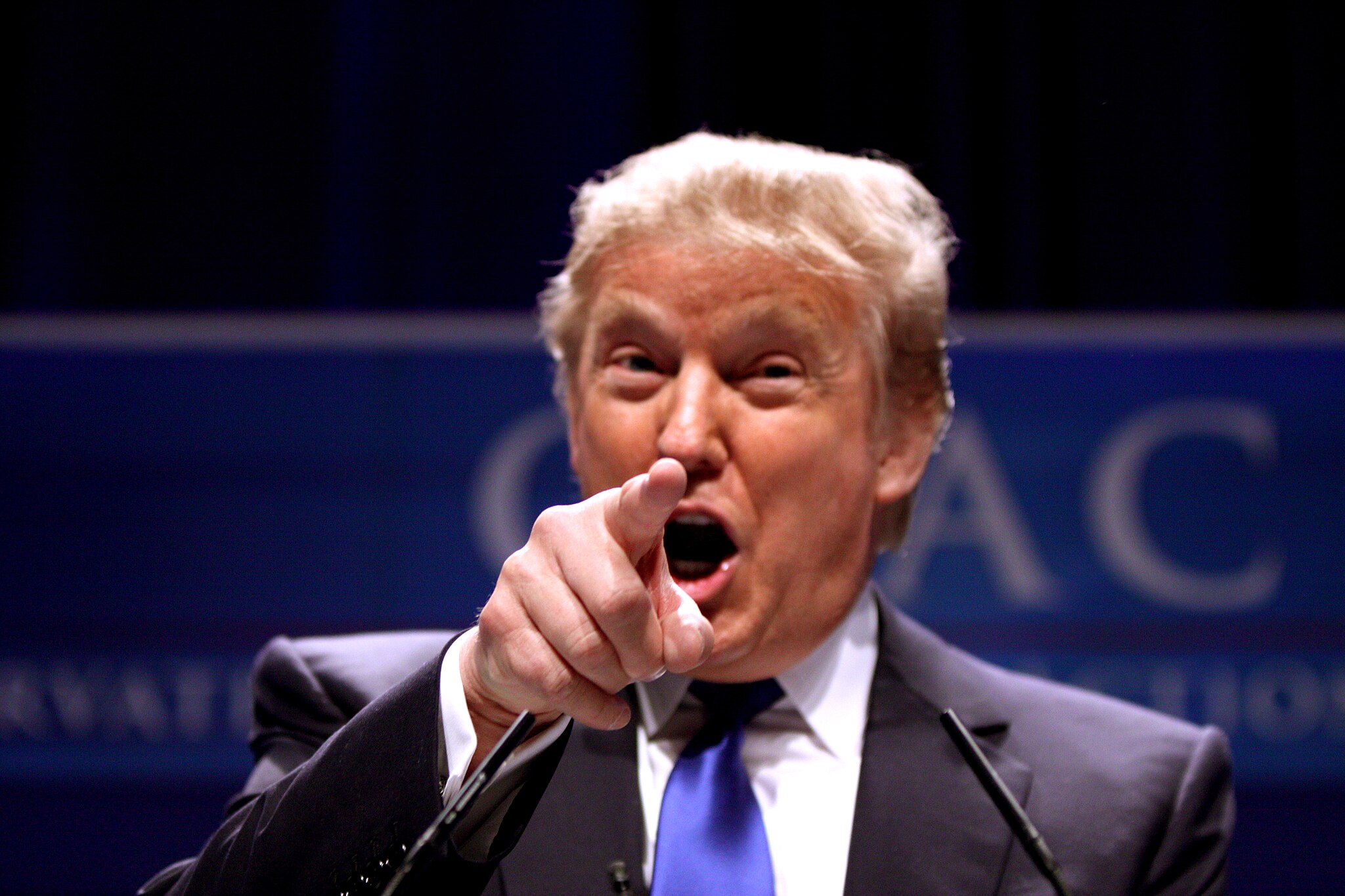
Here’s what conservatives need to know.
President Donald Trump’s latest advertising strategy is creating an unexpected disagreement inside the Republican Party, as several prominent conservatives question whether taxpayer dollars should be used for government-funded television spots that prominently feature the president.
The White House says the advertisements are public-service announcements designed to highlight patriotism, national security and the administration’s priorities.
Some Republican lawmakers and conservative commentators, however, argue that the advertisements come too close to political promotion — especially with the midterm elections only weeks away.
The controversy has sparked a broader debate over government spending, political messaging and where the line should be drawn between explaining federal policies and promoting elected officials.
White House Ads Put Trump Front and Center
The Trump administration has aired several government-funded advertisements featuring the president and themes closely associated with his political agenda.
One advertisement shows Trump criticizing communism while music plays in the background. The commercial concludes with UFC CEO Dana White praising the president’s resilience.
Another highlights Trump discussing promises to challenge what he calls the “deep state” and remove “warmongers” from government.
A third features Trump talking about a new “golden age of America” alongside footage connected to Mount Rushmore.
The White House considers the commercials public-service announcements rather than campaign advertisements.
Critics are challenging that distinction.
Because taxpayers are paying for the messaging and Trump is prominently featured, several Republicans are asking whether government resources are being used appropriately.
Sen. John Kennedy Questions the Spending
Louisiana Republican Sen. John Kennedy is among the most notable GOP figures to publicly criticize the advertisements.
Kennedy said during an appearance on CBS News’ “Face the Nation” that elected officials should not use taxpayer money to promote themselves.
“I don’t think any public official, including President Trump or Kristi Noem or John Kennedy, should spend public money on private ads for themselves,” Kennedy said.
Kennedy acknowledged that the White House views the situation differently but argued that government money should not be used for personal promotion.
His criticism stands out because Kennedy has supported many of Trump’s policies and remains an influential conservative voice in the Senate.
Thomas Massie Raises Concerns
Kentucky Republican Rep. Thomas Massie also criticized the advertising campaign.
Massie, who has frequently disagreed with Trump over federal spending and executive authority, used sarcasm to compare taxpayer-funded presidential advertising to practices associated with less democratic governments.
His criticism reflects a concern shared by some fiscal conservatives: Government spending rules should remain consistent regardless of which party controls the White House.
That argument could resonate with older conservative voters who have long prioritized government accountability, fiscal restraint and careful use of taxpayer money.
Thom Tillis Calls the Ads Inappropriate
North Carolina Republican Sen. Thom Tillis has also questioned the advertisements.
Tillis reportedly described the use of taxpayer funds for the commercials as inappropriate, arguing that political organizations already have access to private fundraising if they want to purchase promotional advertising.
His comments highlight the central question behind the controversy.
Should advertisements featuring a sitting president be considered legitimate government communication when they promote administration policies, or should similar messaging be funded through political organizations instead?
Republicans are now openly debating that distinction.
Other Conservatives Join the Debate
The criticism has expanded beyond current members of Congress.
Former Republican Rep. Justin Amash criticized the use of taxpayer money for the advertisements.
Conservative commentator Erick Erickson also questioned whether the commercials provide enough public benefit to justify government spending.
Former Republican National Committee chairman Michael Steele raised additional concerns about whether government resources should be used for messaging that resembles political advertising.
Their arguments vary, but they generally focus on three issues: taxpayer spending, government ethics and the distinction between official communication and political promotion.
White House Defends the Advertising Campaign
The Trump administration rejects the criticism.
A White House spokesperson said the advertisements are intended to encourage Americans to appreciate the country and understand the administration’s approach to national security, border security and other major issues.
“These public service announcements are about reminding Americans to love their country and understand what makes it worth defending, at home, at our borders, and abroad,” the White House said.
The administration maintains that the advertisements are educational and patriotic rather than political campaign material.
Supporters also note that previous administrations have used taxpayer-funded advertisements to promote federal policies and government programs.
The dispute therefore centers less on whether presidents may appear in public-service announcements and more on how heavily those advertisements should focus on the president personally.
Are Government-Funded Ads Legal?
Federal agencies may use taxpayer money for public-information campaigns when the spending serves an authorized government purpose.
Government agencies regularly advertise programs involving public health, emergency preparedness, military recruitment, transportation safety and other federal initiatives.
However, federal appropriations rules generally restrict taxpayer money from being used for unauthorized publicity or propaganda.
That creates an important legal distinction.
An advertisement designed primarily to inform Americans about a government program may be permissible, while communications intended primarily to promote a political figure or partisan objective can raise additional concerns.
Critics argue that Trump’s advertisements deserve scrutiny because of their strong focus on his image and political message.
The White House disputes that interpretation.
No criticism by itself establishes that federal law was violated. Determining whether an advertisement crossed a legal boundary would depend on the funding source, purpose, content and applicable federal rules.
Why the Timing Matters
The advertisements are receiving additional attention because they are airing shortly before the midterm elections.
Trump himself is not running for office this year, but he remains one of the most important political figures influencing Republican campaigns across the country.
Many Republican candidates continue to seek his endorsement and support, while others are emphasizing local economic issues and distancing themselves from individual administration policies when they believe their voters disagree.
That creates a complicated political environment for GOP candidates.
Trump remains enormously influential with Republican voters, but candidates also have to respond to concerns about household expenses, gasoline prices, the economy, immigration and foreign policy.
Government-funded advertisements placing Trump prominently on television inevitably become part of that larger election-year conversation.
Could the Ads Affect the Midterms?
The political effect remains uncertain.
Trump’s supporters may view the advertisements positively, particularly if they agree with his message about patriotism, government reform and national security.
Other voters may see them differently.
Political scientist Robert Y. Shapiro of Columbia University told Newsweek that voters who are already skeptical of Trump may view the advertisements more as political messaging than traditional public service.
He also suggested that the advertisements are unlikely to outweigh broader issues influencing voters.
For many Americans, those issues include the cost of groceries, gasoline prices, interest rates, jobs, immigration and international conflicts.
Those kitchen-table concerns traditionally play an important role in midterm elections.
Republicans Face a Delicate Political Balance
The advertising dispute comes as Republican candidates across the country determine how closely they want to align their campaigns with Trump.
Some GOP candidates remain enthusiastic supporters of the president while still disagreeing with individual administration decisions.
Iowa Republican Senate candidate Ashley Hinson, for example, has raised concerns about the financial effect of the Iran conflict on Americans dealing with higher fuel costs.
Florida Republican Rep. Maria Elvira Salazar has questioned aspects of the administration’s immigration enforcement strategy.
Florida gubernatorial candidate Byron Donalds also faced speculation over changes to his campaign website after references to Trump were reduced. His campaign said the changes reflected a greater emphasis on Florida-specific issues such as affordability, insurance and government transparency.
Trump dismissed suggestions that Donalds had distanced himself politically.
These disagreements do not necessarily indicate a wholesale Republican break with Trump.
Instead, they illustrate the balancing act facing GOP candidates as they attempt to appeal to Trump supporters while addressing the specific concerns of voters in their own states and districts.
Taxpayer Spending Becomes the Bigger Question
For fiscal conservatives, the controversy may ultimately come down to government spending rather than Trump himself.
Many Republican voters have spent decades supporting lower federal spending, stronger oversight and tighter controls on taxpayer money.
That raises a simple question:
When should taxpayers be responsible for funding government advertisements featuring elected officials?
Supporters of the administration argue that a president must be able to communicate federal priorities directly to the public.
Critics argue that those communications should focus primarily on programs and policies rather than promoting the image of the person occupying the White House.
Both arguments are now being debated openly inside Republican circles.
What Happens Next
The dispute could lead lawmakers or government watchdog organizations to seek additional information about the advertisements.
Questions may include how much money has been spent, which agencies authorized the spending and what federal rules were used to approve the campaign.
The White House has shown no indication that it agrees with critics who say the advertisements are inappropriate.
Meanwhile, Republican candidates will continue navigating their relationship with Trump as Election Day approaches.
For many voters, however, the biggest issues are likely to remain much closer to home: grocery bills, gasoline prices, housing costs, interest rates, immigration and the strength of the economy.
The advertising controversy may therefore become another test of how Republicans balance loyalty to Trump with their longstanding promises of fiscal responsibility and government accountability.




Leave a Reply