
[ad_1]
The Islamic State of Iraq and the Levant (ISIL, or ISIS) declared its third caliph earlier this month: Abu Hasan al-Hashimi al-Qurayshi. Abu Hasan replaces Abu Ibrahim al-Hashimi al-Qurayshi, who led the armed group for 2 years earlier than he was killed in a United States raid within the Idlib province in northern Syria in February.
ISIL is not a world terrorist risk attacking European capitals, or a bunch that holds territory. But it’s nonetheless inflicting injury on safety forces and civilians alike in Iraq and Syria. Additionally it is nonetheless lively, by its regional associates, in Africa and Afghanistan, launching guerrilla-style hit-and-run assaults in opposition to safety forces and massacring civilians.
As a result of most ISIL cells throughout these geographies are autonomous and financially self-sufficient, February’s decapitation strike has doubtless not diminished the group’s community in any vital means.
The slain second ISIL caliph, Abu Ibrahim, didn’t have the excessive profile or the notoriety of his predecessor, ISIL’s first self-proclaimed caliph Abu Bakr al-Baghdadi, who was killed in 2019. The armed group’s new caliph is reportedly the older brother of Abu Bakr. Due to this fact, the February assassination might need unpredictable outcomes, similar to ISIL’s new chief rising as a extra charismatic determine, inheriting the legacy of his youthful brother, and thus strengthening the group.
All this demonstrates that eliminating a outstanding chief could not all the time finish and even considerably injury an armed group. Furthermore, it reveals that, at the very least in the long run, tactical strikes by a single nation can by no means be as efficient in curbing political violence as multilateral peace and improvement methods.
ISIL’s restoration beneath Abu Ibrahim
After the October 27, 2019 loss of life of al-Baghdadi, and the naming of Abu Ibrahim as ISIL’s chief just some days later, in some ways the group appeared little affected by the change of management. It continued to stage assaults in opposition to American and Iraqi forces in Iraq, and regardless of clearly being on the again foot as a result of current collapse of its self-declared caliphate, appeared nowhere close to prepared to surrender the combat.
Even the COVID-19 pandemic that hit the world in early 2020 didn’t do a lot hurt to ISIL, as its fighters had already been practising “social distancing” and sheltering-in-place in sleeper cells for a while. In truth, the pandemic offered some respite to the group, because the world centered its vitality on defeating the virus and didn’t pay as a lot shut consideration to the actions of ISIL operatives in hiding.
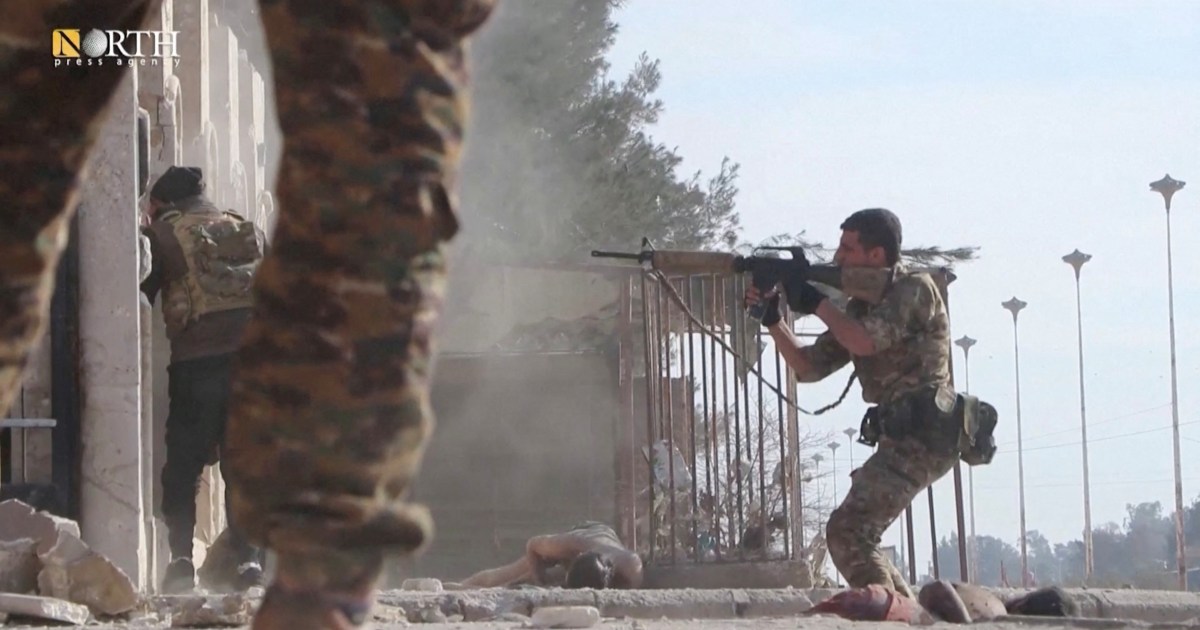
Because the pandemic raged, ISIL established a presence within the Hamrin Basin, the rugged and impenetrable territory between the Iraqi provinces of Salah al-Din, Kirkuk, and Diyala. Simply within the Diyala province, ISIL killed 11 civilians in a Shia village in October 2021, ambushed and killed 5 Kurdish Peshmerga fighters in November 2021, and killed 11 Iraqi troopers as they slept of their barracks in January 2022. On the similar time that the barracks have been hit, ISIL launched an audacious and complex raid to liberate its fighters held in a Kurdish-controlled jail in Hasakeh, Syria. In jap Syria alone, there had been 342 armed confrontations between ISIL and Syrian Kurdish forces since 2021.
Throughout this era, ISIL additionally launched many damaging assaults in Afghanistan and Africa.
In August 2021, for instance, the Afghanistan affiliate of ISIL, the Islamic State in Khorasan Province (ISKP), launched a suicide assault on the Kabul airport killing at the very least 72 folks, together with 13 members of the US navy.
In Africa, ISIL has seven associates threatening 11 nations. Moreover its branches in Tunisia, Egypt, and Libya, ISIL acquired 4 associates in sub-Saharan Africa and the Sahel: in Mali, Niger and Burkina Faso, the Islamic State in Larger Sahara; in Nigeria, the Islamic State West African Province; in Somalia, the Islamic State in Somalia; and within the Democratic Republic of Congo and Mozambique, the Islamic State Central African Province.
No silver bullet
The re-emergence, or extra precisely, the endurance of ISIL in all the aforementioned areas after the killing of its first chief signifies that the armed group will doubtless proceed to pose a risk after the killing of its second chief.
ISIL nonetheless advantages from a functioning organisational forms, an everlasting ideology and communal help. Armed organisations that profit from all three are likely to survive the loss of life of their chief.
ISIL had a excessive functioning military-style top-down forms when it administered a “territorial caliphate” in Iraq and Syria between 2014 and 2018. At present, the group’s bureaucratic construction will not be practically as strong, however it nonetheless seems to be organised beneath a hierarchy. The jail break in Hasakeh, for instance, is believed to have been accredited straight by Abu Ibrahim al-Hashimi al-Qurayshi himself and his interior circle.
This bureaucratic system, with clear chains of command, allowed the group to endure the aftermath of Abu Bakr al-Baghdadi’s assassination, and it’ll most certainly be certain that it survives the aftermath of Abu Ibrahim’s killing.
Certainly, merely weeks after the killing of its chief in Syria, the group introduced a brand new caliph and seems to be persevering with with enterprise as typical.
Through the years, it has routinised its management succession, the place the chief is appointed by a council, with the approval of the opposite branches, in order that the legitimacy of the caliph derives from the place and never the person.
ISIL additionally adheres to a violent Salafist ideology that doesn’t rely on a frontrunner for its articulation or propagation. As a set of concepts, it existed earlier than ISIL and there’s no indication that it’ll stop to exist with the elimination of any explicit chief or political determine sooner or later.
As for widespread help, whereas not a bunch that evokes assaults from San Bernadino to Good, the group nonetheless seems to have pockets of help throughout huge areas that permit it to proceed with its operations. The ISIL presence within the Hamrin Basin, for instance, is enabled by villagers who cooperate with the group by offering its fighters with shelter, meals and knowledge. The jail break in Hasakeh too was most certainly made potential by the assistance supplied by networks of sympathetic Arab villagers against Kurdish management over their areas.
In sub-Saharan Africa, ISIL associates combat in opposition to present al-Qaeda associates, which permits them to kind native political alliances. They’ve additionally garnered help from clan leaders, nomads and farmers over points similar to grazing rights.
ISIL’s continued presence in Syria, Iraq, Afghanistan and Africa demonstrates that assassinations of leaders cannot be seen as an efficient long-term technique within the combat in opposition to armed teams. Certainly, each in 2019 and 2021 US raids efficiently eradicated ISIL’s leaders, but did nothing to get rid of the underlying circumstances that allowed the group to realize affect and help – and in consequence, ISIL remains to be right here and it’s nonetheless wreaking havoc throughout a large geography.
With all alerts pointing to ISIL persevering with to pose an actual risk after the assassination of its second caliph, it’s excessive time our political and navy leaders settle for that the trail to utterly eliminating the group will not be by tactical navy operations, however long run multilateral peace and improvement methods.
The views expressed on this article are the creator’s personal and don’t essentially mirror Al Jazeera’s editorial stance.
[ad_2]








Leave a Reply