
NATO thought it was over but apparently not.
President Donald Trump renewed his push for greater U.S. control over Greenland during the NATO summit in Turkey, once again placing the strategically important Arctic territory at the center of an international debate. His comments reignited discussions about Arctic security, NATO alliances, and growing competition with Russia and China, while drawing immediate responses from leaders in both Denmark and Greenland.
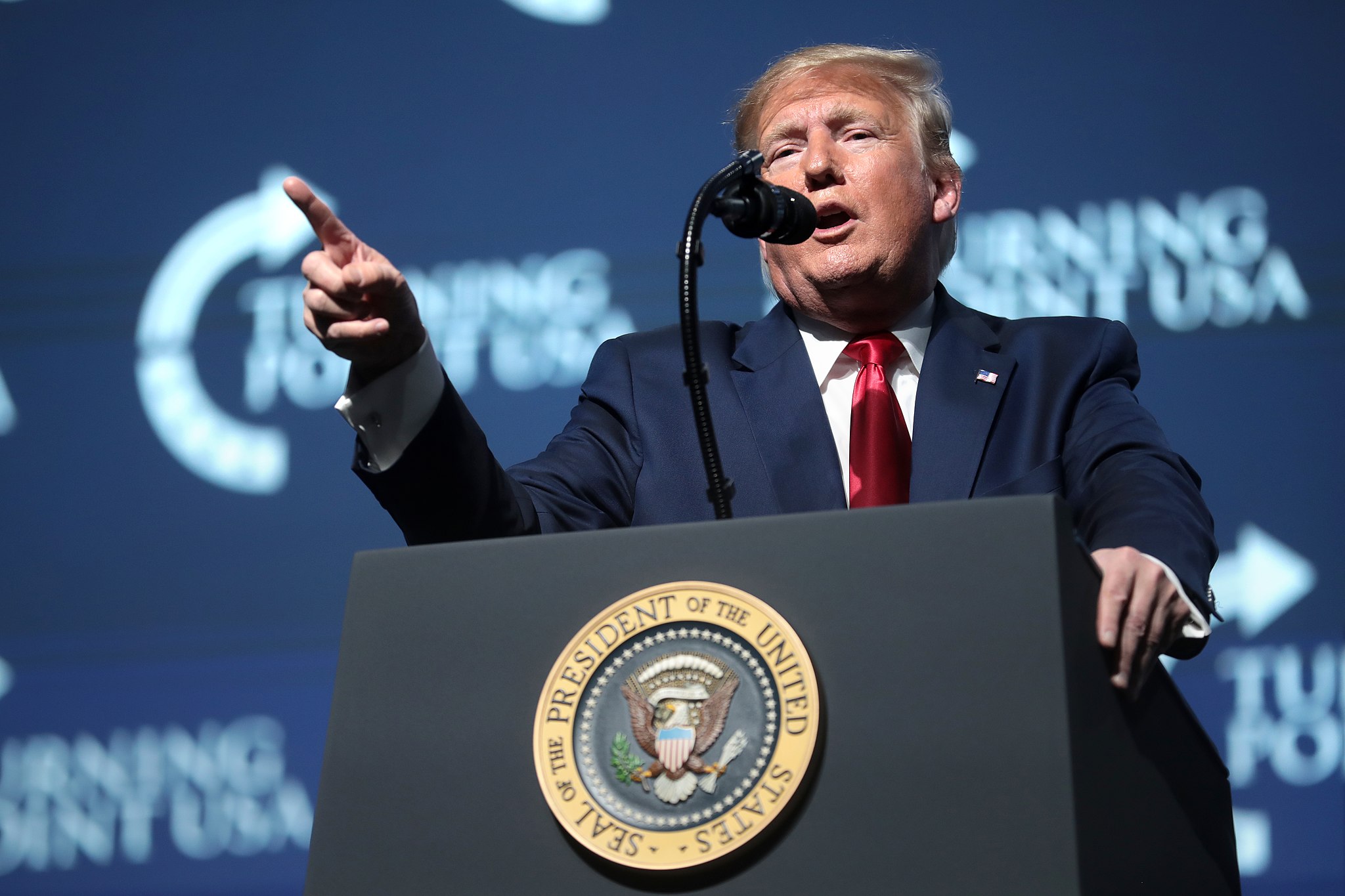
Speaking during a bilateral meeting with Turkish President Recep Tayyip Erdoğan, Trump argued that Greenland’s geographic location makes it a vital asset for American national security and suggested the United States should have control of the island rather than Denmark.
“Greenland doesn’t help Denmark,” Trump said, adding that the territory is “an important part for the United States.”
His remarks revived a proposal that has remained controversial since it first surfaced during his presidency and has continued to generate debate among U.S. allies.
Why Trump Wants Greenland
Trump has repeatedly argued that Greenland’s location makes it one of the world’s most strategically valuable territories. Situated between North America and Europe, Greenland occupies a key position in the Arctic, where military activity, shipping routes, and competition for natural resources have increased in recent years.
The Arctic has become an area of growing geopolitical importance as Russia expands its military presence in the region and China increases investments in Arctic infrastructure and research. Defense experts have long viewed Greenland as an important location for missile detection, early warning systems, and monitoring activity across the North Atlantic.
The United States already maintains a military presence on the island through Pituffik Space Base, formerly known as Thule Air Base, which plays a significant role in missile defense and space surveillance.
Trump has argued that increasing American control over Greenland would strengthen U.S. national security and improve the country’s ability to respond to emerging global threats.
Questions About NATO and European Defense
During his remarks, Trump also discussed America’s military commitments to Europe.
He suggested that if European allies continue to rely heavily on U.S. defense spending while opposing American priorities, Washington could reconsider the size of its military presence across the continent.
“We could remove all of our soldiers out of Europe,” Trump said.
The president also warned that Europe faces significant long-term challenges involving immigration and energy policy, arguing that decisions made by European governments today could have lasting consequences for the continent’s future.
The comments reflected Trump’s longstanding position that NATO members should assume a greater share of defense responsibilities while reducing reliance on American military resources.
Denmark and Greenland Respond
Leaders in Denmark and Greenland quickly rejected Trump’s latest comments.
Danish Prime Minister Mette Frederiksen reiterated that Greenland is not available for purchase or transfer and said there were no plans to discuss the issue during meetings in Turkey.
Frederiksen noted that the United States has maintained its interest in Greenland for some time but emphasized that Denmark’s position remains unchanged.
Greenland’s leadership also reaffirmed that the island’s future will be determined by its own people.
Greenlandic officials stated that decisions regarding the territory belong to Greenland’s residents, reflecting the island’s status as a self-governing territory within the Kingdom of Denmark.
While Denmark oversees foreign affairs and defense, Greenland manages most domestic issues through its own government.
Why Greenland Matters
Although Greenland has a population of fewer than 60,000 people, it covers more than 800,000 square miles, making it the world’s largest island.
Its importance extends far beyond its population.
The island contains significant deposits of rare earth minerals and other natural resources that are increasingly important for advanced technology, renewable energy systems, and defense manufacturing.
Climate change has also increased international attention on Greenland by opening new Arctic shipping routes that could reshape global trade over the coming decades.
These developments have intensified competition among major world powers seeking greater influence in the region.
Because of its location and strategic value, Greenland has become a key component of discussions surrounding Arctic security, NATO planning, and long-term geopolitical strategy.
A Debate That Has Continued for Years
Trump first raised the possibility of the United States acquiring Greenland during his first term in office, drawing widespread international attention.
The proposal resurfaced during his second term as concerns about Arctic security and competition with Russia and China continued to grow.
Earlier this year, Trump suggested that several options remained under consideration before later describing discussions with NATO Secretary-General Mark Rutte as part of a broader framework for future cooperation involving Greenland.
On Tuesday, Trump acknowledged that his position on Greenland has complicated relations with some NATO allies, saying the issue has affected his relationship with the alliance.
Despite those diplomatic tensions, administration officials have indicated that conversations with Denmark and Greenland remain active.
Secretary of State Marco Rubio recently told lawmakers that discussions involving the United States, Denmark, and Greenland are continuing and described the ongoing dialogue as being in a positive place.
The Bigger Picture
Trump’s latest comments underscore how Greenland has evolved from a remote Arctic territory into one of the world’s most strategically important regions.
As competition among the United States, Russia, and China expands across the Arctic, policymakers increasingly view the region through the lens of national security, military readiness, critical minerals, and future trade routes.
Whether Trump’s proposal gains broader international support or remains a point of disagreement among NATO allies, Greenland is expected to remain a major topic in global diplomacy for years to come.
With Arctic security becoming an increasingly important part of international relations, the debate over Greenland reflects broader questions about defense cooperation, geopolitical competition, and the future of NATO in a rapidly changing world.






Leave a Reply